President & CEO |
FLEX Vascular
Hometown: Amsterdam, NY
Alma Mater: West Point (United States Military Academy)
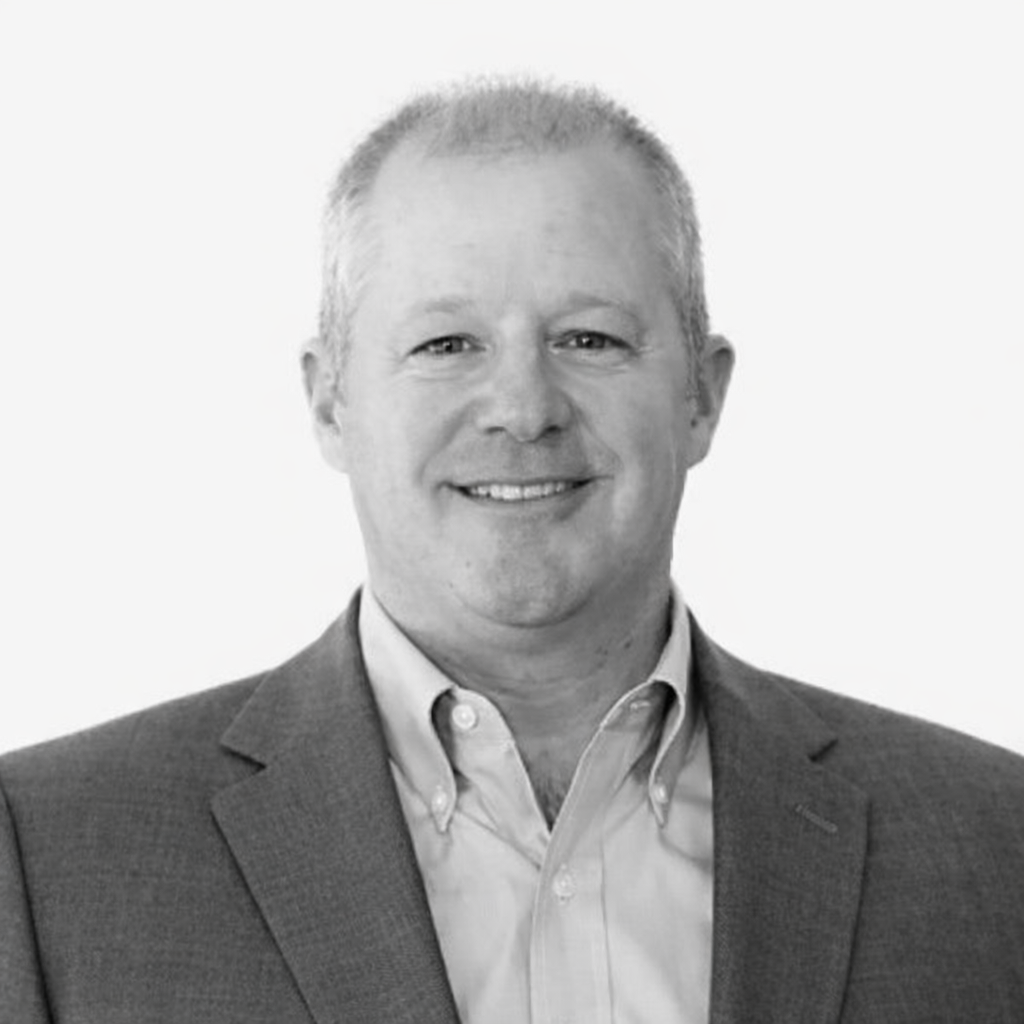
Denis Harrington is President, CEO, and Director of FLEX Vascular, the medical device company behind the FLEX Vessel Prep™ System, a technology designed to improve outcomes in vascular interventions. Denis brings more than 30 years of experience in vascular device commercialization and executive leadership. Prior to FLEX, he served as CEO of BridgePoint Medical, guiding the company from development through commercialization and its eventual acquisition by Boston Scientific. He spent 18 years at Boston Scientific, most recently as Senior Vice President of U.S. Cardiology, Rhythm, and Vascular Sales, overseeing more than 1,800 team members and $3B in revenue. A graduate of the United States Military Academy at West Point, Denis began his career as an Army officer, a foundation that has shaped his approach to leadership ever since.
Let's start with your story. Where are you from, and how did you end up in Minnesota?
I was born and grew up in Amsterdam, NY. It was your tried-and-true typical blue-collar town on the Mohawk River, in upstate New York. If you’re familiar with the area, it’s roughly 30 miles west of Albany. It was a great place to grow up being 1 of 10 kids.
From there, I went on to West Point and served in the Army. Once it was time to transition into business, I joined a private surgical instrument company and that led me to Boston Scientific.
What took me to Minneapolis was business and a deal with my wife. My family and I were in Orlando, FL, and at the time we had already moved quite a bit. So, I made my wife a deal. If we move to Minneapolis for my role at Boston Scientific, we wouldn’t have to move again. That's what brought us here.
What's a "first job" story that still makes you smile or shake your head?
I did a lot of the same things kids of my generation did — paper route, altar boy. But the one that sticks with me is flipping burgers at McDonald's. After football season in high school, my father said that if I was not playing a sport, I needed to get a job.
Those days were greasy, but it was the first time I had insight into an organizational structure where each role was clearly defined. You had checklists, detailed instructions, and guardrails for every station — from the grill to the cashier to the back stock.
Besides McDonald’s being an operational wonderland, I earned one credit toward food each hour worked. And since I was the burger guy, let’s just say I had some latitude. I’d create my own version of a Big Mac: two quarter-pound patties, quarter-pounder cheese, special sauce, and no middle bun. In my opinion, it was way better than the Big Mac or the Quarter Pounder.
Fun fact, you know the song they used for commercials? That was the same song they used to train their staff back in the day. It was one well-oiled machine.
Was there a teacher, coach, or mentor who changed your trajectory?
I've had no shortage of mentors — West Point, the Army, three decades in industry. But the most influential was a nun who taught Latin in high school.
Her classroom was really unique. All the desks were arranged in a horseshoe and I remember her desk sitting right at the head. It was to deliberately reconstruct the Roman Senate. It was empowering — as if we all were senators. So, she wasn't just teaching Latin; she was showing us how to think, speak, and debate.
Years later when I sat for the LSATs, it was her lessons that carried me through some of the more difficult concepts. The way she taught us to think never left and is still with me today.
But, man, her track record was like no other. Sister Anna spoke seven languages, held advanced degrees in five of them, and had babysat the Kennedy family during her formation as a nun. To this day, I still count her as one of the most influential people in my life.
You've spent more than three decades in vascular devices and led large-scale cardiovascular sales organizations. What originally drew you into the medical space in general?
Candidly, it wasn't a grand plan. Most of my early career was about making it to the next level.
Coming out of the Army, I went through a specialty recruiter who placed junior military officers into the workforce. I assumed I'd land in manufacturing — running a line, managing a plant. But the recruiter pushed me toward medical device sales. At the time, it was the late 1980s, and neither my father nor I knew anything about it. In fact, he said, "you went to West Point to sell shoes at Sears?"
Fast forward to my first interview at Walter Lorenz Surgical, a company specifically recruiting junior military officers for their sales team. After meeting with them, I knew that was the job I wanted. The energy these people had, the idea of bringing technology directly into the operating room and supporting a physician in real time — it felt like being on the front line. The quota became a mission, and for someone coming out of the Army with a wife and three kids depending on him, that framing clicked immediately.
Tell me about FLEX Vascular, at a high level what are you and your team looking to solve?
FLEX Vascular was founded by John Pigott, a vascular surgeon from Toledo. Like many of the best origin stories in medical devices, it starts with a frustrated clinician.
John was dissatisfied with the tools available for vessel preparation before intervention. Atherectomy devices, lasers, lithotripsy — none of them were delivering the level of precision his patients needed. What he wanted was something that could function as both a scalpel and a valvulotome inside a closed, catheter-based environment. That tool didn't exist, so he built it.
FLEX is catheter-based, but it operates as a true endovascular scalpel. It is not a balloon. It is not an atherectomy device. It is not a laser. It is a fundamentally different approach to lesion preparation — one designed from the ground up around the limitations its founder lived firsthand.
Today, FLEX has FDA clearances across three distinct indications: peripheral arterial disease, arteriovenous fistulas and grafts, and in-stent restenosis. We are also actively adapting the platform for venous structures — a different disease state, different anatomy, and what we believe will be a meaningful expansion of what FLEX can address.
How do you see medical device innovation transforming in the U.S. over the next decade?
I'll speak to the cardiovascular and endovascular space specifically, where I believe we're entering a pivotal moment. The next phase of this industry will be defined by two things: how precisely we assess vessel health before intervention, and how intelligently we use AI to interpret what we're seeing.
Flow mapping is at the center of the first shift. Physicians can now evaluate not just a lesion's cross-section, but its full composition and what's happening downstream in a way that carries meaningful diagnostic weight without significant risk to the patient. That level of clarity changes the calculus for lesion preparation. It was never that the field ignored vessel health, it's that we lacked the tools to assess it with enough precision to act on it confidently. Flow mapping is closing that gap. And when lesion preparation improves, therapy delivery improves — and patient outcomes follow.
On the AI front (and I use the term carefully because it is overused) the most practical near-term application is in image interpretation. The diagnostic tools we've discussed generate enormous amounts of complex data: vessel wall composition, flow dynamics, plaque morphology, downstream pressure gradients. Today, synthesizing all of that in real time during a procedure places significant cognitive demand on the physician. AI has a genuine role to play in processing that data faster, flagging what matters, and reducing interpretation variability across operators and institutions. That is where I see the near-term value — not in replacing clinical judgment, but in making sure nothing gets missed before a therapy decision is made. The actual delivery of intervention will remain in the hands of a skilled clinician for the foreseeable future. The stakes are too high and the variables too nuanced for that to change anytime soon.
If you could press a button and master anything non-work related, what would you pick and why?
So, I have two.
The first is retroactive. I would go back and ensure I was built at six-foot-four, 240 pounds so I could have played college football as a middle linebacker. That was my dream as a kid, but as far as I can tell, that’s not happening.
The second is time. I have five grandchildren who live nearby, which my wife and I consider an extraordinary gift. Between Irish dance, hockey, and lacrosse, the schedules outnumber the hours in the day. What catches me off guard is that they still think I'm funny, and I know that won't last forever. If I could master anything, it would be the ability to be fully present for all of it, all at once.
I suspect that answer says more about where I am in life than any professional response could.